The Orthodox Parish of St Aidan & St Chad, Nottingham (EP)

6th Sunday after Pentecost.

19/7/2020

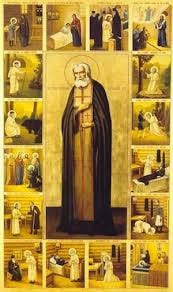
On this Sunday, we remember and honour St Seraphim of Sarov, one of the best known of Russian saints across the Christian world in both East and West.

In his conversation with one of his spiritual children, Nikolai Motovilov, St Seraphim spelled out his understanding of the aim of Christian Life saying,” The true aim of our Christian Life is the acquisition of the Holy Spirit”.  St Seraphim explained this. We as human beings, following Adam and Eve are spirit, soul and body; Adam was made thus from the dust of the earth like all other living creatures. Then God breathed into his face the Breath of Life, the blessing of the Holy Spirit proceeding from the Father; without this, Adam would not have completely exceeded all previous creations of God. Adam became the crowning of God’s creation on earth. Now, he possessed the Holy Spirit within himself; this raised him to the dignity of being in the image of God. In this exalted state Adam could indeed see the Lord walking in paradise and the fruits of the Tree of Life would guarantee that Adam and Eve and their offspring would have remained in this exalted position, Lords and Ladies, Kings and Queens of Creation. Adam, when given the Breath of Life, became a living soul, fully alike to God and forever immortal. This Breath of Life breathed into Adam’s face made him wise and knowing to the extent, “that there never was or ever will be a man more wise and knowing than he”. He was admired and obeyed by every creature, “He could comprehend God walking in the garden, he could comprehend all the words of the conversation of the Almighty with him, and the speech of the blessed angels, and the language of all animals, birds and reptiles on earth. Everything which today is hidden from us, as fallen sinful creatures, was for him clear until the Fall”. St Seraphim adds, “the same wisdom and all other blessings and holy qualities were also granted to Eve”.

Adam and Eve, by breaking with God, gave up this priceless gift of God and this was so until the coming into the world of Our Lord Jesus Christ.  However, the action of the Holy Spirit was fully and continually known to the human race as we see in the lives of Noah, Abraham, Moses, the Children of Israel coming out of Egypt and in the lives and understandings of the Prophets. Latterly, we see this in Simeon who received God into his arms at 40 days after his birth as a man, and the prophetess Anna and, of course, John the Baptist and Forerunner.  The full restitution occurred when Our Lord completed His task of Salvation when He breathed on the Apostles and renewed the Breath of Life in them which had been squandered by Adam. He gave them the same grace of the Spirit of God that Adam had lost. Then, at Pentecost, the Holy Spirit entered them fully filling them with the power of Divine Grace.  We have evidence of this in the driven apostolic lives they lived and as when St Paul said, “The ‘Holy Spirit went with us”. The Apostles were always instructed by the Holy Spirit about everything and acted accordingly. St Seraphim said to Motovilov, “Our lack of understanding occurs because of our lack of attention to matters concerning salvation...... because of this we do not understand the words of scripture as we should.....because we do not seek the grace of God and let it enter our souls..... thus, we do not have the enlightenment from above, from the Lord God which is sent into the hearts of those who hunger and thirst after His righteousness with their whole heart”.

This fire inspired blessing of the Holy Spirit is given to all the faithful in Christ, in the sacrament of Holy Baptism when we are anointed with the Holy Chrism with the words,  “The seal of the  gift of the Holy Spirit”. This is the most precious gift we have ever received. If, after our baptism, we never sinned then we should be eternally holy, blessed, God-Bearing and pure; free of all impurity of body and spirit. We would be restored to all that Adam was before the Fall or rather all that Our lord Jesus Christ is. Even with our sinfulness, this transfiguration is not only available to us but is how we should be. It is the theosis so well proclaimed in our Orthodox faith.

Hence, the goal of our Christian life consists in acquiring the Spirit of God and this, according to the teaching of St Seraphim, is the goal of every Christian who lives in a spiritual manner.  There is so much more that can be said and I hope that you will be able to read The Aim of Christian Life, The Conversation of St Seraphim of Sarov with N.A. Motovilov (Saints Alive Press).

The Epistle for St Seraphim’s feast, Galatians 5:22 to 6:2 helps us on our way: “ But the fruit  of the Spirit is love, joy, peace, long-suffering, kindness, goodness, faithfulness, gentleness, self-control. Against such there is no law......
If we live in the Spirit, let us also walk in the Spirit......
(Let us ) bear one another burdens, and so fulfil the law of Christ”.

We should also remember St Seraphim’s dictum: “My Joy! Acquire the Spirit of Peace and thousands around you shall be saved.”

For our thoughts and instruction,

Fr David
4th Sunday After Pentecost  (Matthew 8:5-13 – A Paralysed Servant Healed

6/7/2020

I wonder what you would list if asked “What should you believe in?” That very question was asked in a recent survey, the result of which is as follows –
1. Yourself.   2. Others (the goodness of).   3. The power of kindness.    4. That this too shall pass.  5. Your inner strength.   6. Courage.   7. Hope.    8. Your influence on the world around you.         9. The truth.   10. The power of words.   11. Hard work.     12. Your goals and dreams.                13. Change.    14. Forgiveness.    15. Your power over your thoughts and feelings.   16. Learning.   17. Self-discover.   18. Fairness.    19. Humanity.    20. Peace.
Now, I don’t know about you, but I find this list very disappointing; not least because belief in ‘self’ comes top!

What we ‘believe’ is so very important!  

  • Belief determines our perceptions of reality. 
  • Belief shapes every thought, decision, and action. 
  • Belief defines the parameters of what is possible. 
  • Belief emerges from the soul—from that inner core of our being that defines who we are and what we do. 
  • Belief even alters the contour of eternity.

If what we believe shapes our thoughts, and determines our perception of reality, then I think we can agree with A W Tozer that, “What comes into our minds when we think about God is the most important thing about us”

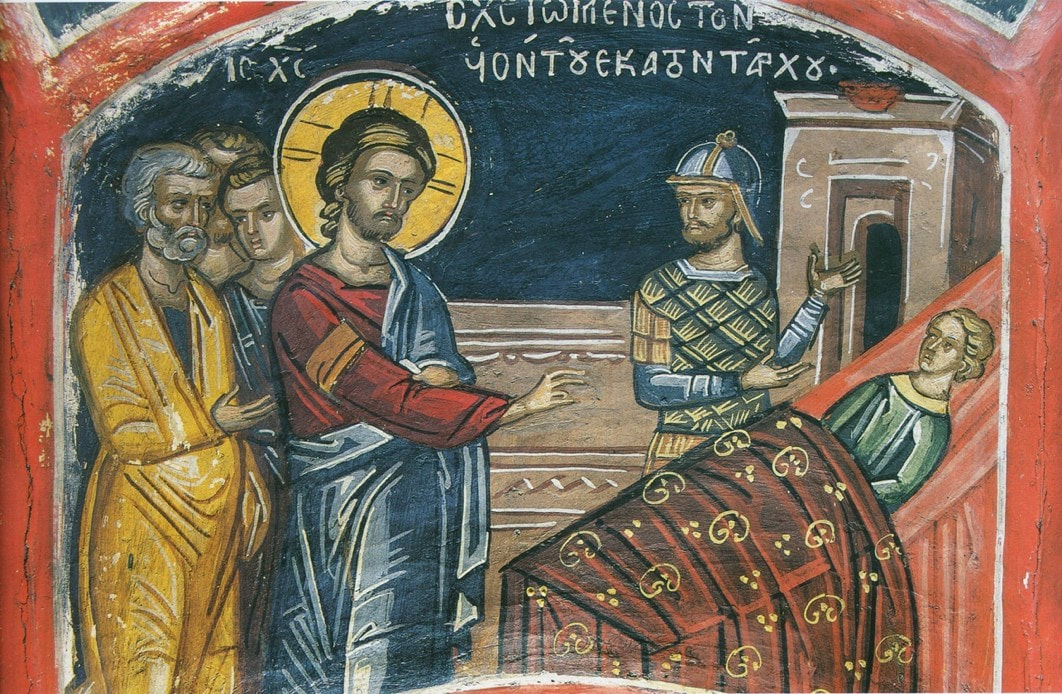
I am sure we are all very familiar with today's gospel reading.  We have all read, or heard, how a Roman centurion asks Jesus for his help because his servant is ill. Jesus offers to go to the centurion's house to perform a healing, but the centurion hesitates and suggests that Jesus' word of authority would be sufficient. Impressed, Jesus comments approvingly, “Verily I say unto you, I have not found so great faith, no, not in Israel.” The servant is then healed that same day.

How did Jesus know this man, this Roman centurion had faith?
When we truly believe in something, we think and act in ways to make it real. This is why the Apostle James tells us that “faith without works is dead” (James 2v26).

So, what are the ‘works, which accompany the centurion’s faith.
Well, He sought healing for his servant. This is an account of a person beseeching our Lord on behalf of another, resembling other Gospel events such as Jairus and the Syro-Phoenician women praying for their daughters (Mark 5:23; 7:24-30).  

These are accounts of intercessory prayer, intercession being a “supplication to God on behalf of another ‎person.” To pray for others is the most critical skill we can learn. In fact, we cannot learn any higher form of prayer unless we learn to pray for others. This is because ardent, frequent prayer for others embodies two great virtues, love and faith.
We are self-centred creatures; remember what came top of the most important things to believe! - and rarely think of others and even more rarely feel their pain, but our Lord knows it. We are called to become like our Lord, to have His heart. He cares for all people, at all times. We cannot claim to know God if we do not love, and according to the scriptures, we cannot love God unless we love our neighbour (1 John 4:20)
We also express our faith when we pray for others, because we poor, weak creatures are afflicted with the delusion that we somehow can control things. The truth is, only God can heal, without God nothing is good. Praying for others contradicts and rebukes this foolish self-reliance.
So, how can we learn and develop our intercessory prayer? There are practical and spiritual considerations.
The most important consideration is that we make a commitment to pray for others, and value doing it as much as breathing. It is not always easy, and our passions and the ‘enemy’ will continually try to distract us. If we do not have a resolute heart, we will make very little progress.
It can help if we make a list of people to pray for; family, friends, clergy. Absolutely, all of your enemies, and everybody you do not like, or have any estrangement with. Of course, the sick, and those for whom we have been asked to pray, together with all of members of our parish.
Ideally, we should pray for everyone on the list, at least once every day. This should not be rushed. This is not about firing off a bunch of names after saying a few quick prayers in the morning or evening. We should give our intercessions the time and the environment they deserve
When we intercede for others all we need do is ask for God’s mercy. Mercy, not in the legal sense but God’s mercy; His undeserved, freely given, unconditional love. And because of this, His love for us, He will help us in every way, but only if we ask, and if we try to live according to His will.
The power of belief is, itself, something to believe in. When we believe in something, you think and act in ways to make it real. So, choose what you believe in carefully. The Orthodox Church firmly believes in the power of prayer and intercessions. Do you?

3rd Sunday after Pentecost

27/6/2020

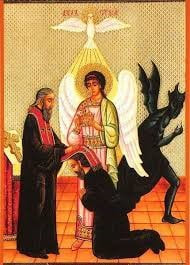
In my pastoral letter for 6th Sunday of Pascha (24 May) I mentioned the importance of the Sacrament of Confession. I should like to say more about this.

Last Sunday, for All Saints of Britain, I talked about our being made in the image of God and, hence, icons (the Greek word for image) of Christ.  Of course, if we likened this to one of our painted icons, we see the fading of age, paint chipped off, smudged areas, parts touched-up and the general result of wear and tear and weather. But yet it is clearly recognised, a hint of original beauty is still there, we recognise the image clearly. This well-worn icon has to be restored and can only be done through the hands of an expert iconographer. Pursuing this thought for ourselves, we too have to be restored and this must be done by the expert, even Christ Himself. When we go for the Sacrament of Confession, yes, we are in the presence of the priest, but the meeting is with Christ, and it is He who is there to restore.

A question often raised is this, why should the Sacrament of Confession be necessary, when a private confession of sins should be enough?  Some also say, is it not an alternative to counselling or psychotherapy? The answer to the latter is no, the Sacrament of Confession, is quite different to counselling and psychotherapy and yes, the Sacrament of Confession, with a priest is attendance, is necessary.

We are of a complex make-up. Our very means of survival is for unpleasant, and stressful experiences, including sin, to be tucked away in the unconscious part of our mind, 'out of sight, out of mind’. Hence, we have to pray, before confession, that the Holy Spirit will enlighten the dark places of our heart, to enable us to make a full and honest confession. This is done more thoroughly when we have to stand with a priest in attendance. People will discover what a relief it is for these dark ‘secrets’ to be revealed, ‘found out’ , if you like.  Our nature is to try very hard that we are not found out. We try not to be sinners with regard to each other and even to God Himself, so we can never jump out of the rut into true freedom without help. We make every effort, often and usually unconsciously, to hide or deny our sinful nature. Even if we do find time to make the effort to discover and confess privately, it is never complete. St Paul, when he had undergone his conversion and made his confession, never denied that he had been a real enemy of Christ, and the deeds he had committed were appalling. The Sacrament of Confession may be hard to face, yet we have to say, ‘This is what I am, and I am ashamed of it, I am sorry, and I want to start afresh’.

Public Confession was initiated in the early Church because of the profound sense of Oneness, the sense of belonging together in Christ and in the Church. It was recognised that the Church could be wounded and disfigured by anyone's sinfulness or unfaithfulness. A person who had acted against the integrity of the Body, the integrity of its faith, had to confess because what was important was the matter of his salvation from death to life in the Body to which he belonged, and the healing of the whole Church. The reason why confession is so different from counselling or psychotherapy is because it is about restoring a person to life in Christ, restoring his full communion within the Body of Christ, the Church. As St Paul in 1 Corinthians 12, writes that the Body is one and has many members, we have all been baptised into the One Body which is Christ. No member can say to another, 'I have no need of thee’, all are necessary for the full life of the Body. Estrangement of one person from the Church by whatever means is a failure of love. The second lack of love is murder understood by Our Lord’s elaboration of this Commandment, ‘Whoever is angry with his brother without a cause…. whoever curses his brother (or belittles him) …is in danger of hell fire’ (Matt 5:21–22). The third sin highlighted by the early church was that of adultery because it is sin against the love God has given to two people. These sins are incompatible with belonging to the Church, the Body of Christ because as one Body, we live the life of Christ Himself and such healing and restoration to communion can only be brought about by Christ Himself. If by our sin we have wounded the Body of Christ, no healing is possible unless we go to Christ Himself for such healing and this is the purpose of Sacramental Confession.

St James in his epistle (James 5:16) advises that all who are in need must come to confess sins to each other. This is directed towards the individual who has fallen away from integrity. It is a coming to Christ, in the presence of a man of prayer, 'And the prayer of the faithful will save the sick, and the Lord will lift him up. And if he has committed sin, he will be forgiven’ (James 5:14-16)

When we come to confession, it is to Christ we come, not to anyone else, to Christ who has given Himself, His life and His death for our salvation. It is not the priest we are coming to. He stands there as the representative of the community, he stands in prayer and to his prayer is added the prayer of the whole community, 'the prayer of the righteous'. The priest is hearing the confession but not listening to it. He is simply holding the penitent to Christ and praying silently. He may, if he feels able, make some comment or give some advice but only if prompted to do so by God. He may say nothing but give the prayer of absolution, or he may say something that is helpful. The most important part of the confession is that the one making it  is restored and  forgiven, His sin has been put away by Christ who stands there representing the life of God the Father expressed so beautifully in the Parable of Prodigal Son, the Parable of the Loving Father always waiting for his son ( and daughter) to return and to be received with open arms and with love, now to be fully restored.

The process is not a mechanical one. If we have made a good preparation and are prepared for the embarrassment and have the courage, we are integrated into the Christ's death and eternal life. What we have rejected and lost, of what God has given us, our faded image (icon) can now begin further restoration in the hand of the divine ‘iconographer'.

As one priest said, ‘I go to confession because it is provided by the Church as a necessary aid to salvation’.  Whatever else, it is certain that Sacramental Confession brings about the forgiveness, the restoration and the healing we require.                                                                                                                                                                                  

Fr David

2nd Sunday after Pentecost - SUnday of All British Saints

21/6/2020

Today we continue to remember All Saints and especially those of Great Britain. It is profitable to reflect on why we call them saints. What made them so? The first Apostles and Disciples had experienced the reality of our Lord’s Resurrection and the new understanding and life change they had now been given. Then, they experienced the outpouring of the Holy Spirit which gave them confidence, strength and ability to go throughout the world proclaiming the Good News of Christ. They emanated God in their lives as if the weaknesses and flaws of their own personality had been set aside.
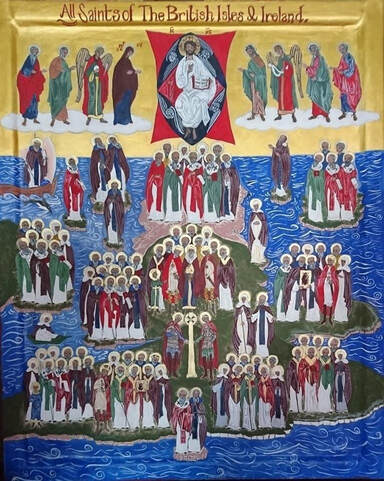
In due time, Saints arrived in Britain; St Aristobulos of the Seventy is acclaimed as Apostle to Britain in the Greek Synaxarion of Saints; one local tradition is that St Simeon Zelotes was crucified in Caister, Lincolnshire; of more certain tradition, we have St Alban who was martyred circa 209. Missionaries evangelised the British people with David of Wales, prominent among them. Following St Patrick, Columba became the Apostle to Scotland in the fifth century and St Aidan, Apostle to the north from 625 with his pupil, St Chad becoming for us the first English bishop in the Midlands. In every century there were saints who were convinced that Christ had Risen indeed and was with them to befriend, inspire and guide. They realised that they were made in God’ s image and were endeavouring to be transformed into the likeness of Christ by the indwelling and transforming action of the Holy Spirit. It was this Christlikeness radiating through them which enabled them to proclaim the Gospel with authenticity.  Radiating from them was a compelling transforming power which impressed men and women and their leaders to turn to Christ. It is important for us to recognise this because we too are called into the same life of sainthood; this is the vocation of every Christian soul. We are made in the image of God; we are icons of Christ. That is why, in every Liturgy, the priests or deacon frequently censes every person in the church gathering after he has censed the painted icons. All are icons of Christ. Of course, sometimes the icon has faded with age, paint has become smudged or has been chipped off, the original has been defaced. Even so, it is still a genuine icon, its face still shines but now it is in need of restoration. Our Christian life is indeed the process of restoration.

Metropolitan Anthony used to point out that when we read a passage of scripture or word of a particular prayer (all prayers have been written by saints) and we feel particularly inspired, then we must stay with that passage and savour it because, at that point, we and God are one and of one heart. These words are relevant for us in a very special and unique way. At that point we are akin to God and this passage which expresses our self must be kept because if we break with it, if we sin against it, we are destroying our self. We are not only stepping away from what God is saying to us, but we are acting against our self, our better self. We are failing to allow our icon to be restored.  The Saint is the one who has had such experiences, over and over again, and cherishes each, reflecting upon it and savouring it until, by accumulation of being akin with God, over and over again, he/she is transformed into Christlikeness. He/she has truly become the icon of Christ he/she was always meant to be. Such persons become not only Christlike but also Christ in a different form. Their personality remains but now transfigured; their lives are enlightened with a radiance which enlightens all with whom thy come in contact. The icon of Christ within them shines out.

This, then, is the witness of Saints and a reminder and encouragement to us that we are to be on the same path of saintliness. One famous Jewish Teacher said, that when we come to the Judgment Seat of God, He will not ask if we have become like King David, The Prophet Elijah or any other distinguished godly figure but have we become ourselves; transformed into what God want us to be. This is the saint we are to become, uniquely transformed from image into the likeness of Christ whilst becoming our greater and finer self, an icon restored.

May God bless us in our understanding and our endeavour.

Fr David

Homily: 1st Sunday After Pentecost – All Saints

13/6/2020

Matthew 10:32-33 New King James Version (NKJV) Confess Christ Before Men
 32 “Therefore whoever confesses Me before men, him I will also confess before My Father who is in heaven. 33 But whoever denies Me before men, him I will also deny before My Father who is in heaven.
Matthew 10:37-38
37 He who loves father or mother more than Me is not worthy of Me. And he who loves son or daughter more than Me is not worthy of Me. 38 And he who does not take his cross and follow after Me is not worthy of Me.
Matthew 19:27-30
27 Then Peter answered and said to Him, “See, we have left all and followed You. Therefore, what shall we have?”
28 So Jesus said to them, “Assuredly I say to you, that in the regeneration, when the Son of Man sits on the throne of His glory, you who have followed Me will also sit on twelve thrones, judging the twelve tribes of Israel. 29 And everyone who has left houses or brothers or sisters or father or mother [a]or wife or children or [b]lands, for My name’s sake, shall receive a hundredfold, and inherit eternal life. 30 But many who are first will be last, and the last first.

Do you have a favourite Hymn? I am sure most of us do. I also have hymns that I struggle with. One such hymn for me is “Onward Christian Soldiers”. It is not so much the hymn itself but more to do with my inability to connect with the ‘Soldier’ concept. The thought of being a soldier ‘marching off to war’ just doesn’t work for me. However, I have for many years thought that I would very much like to be Samurai for Our Lord!   
 Why Samurai?

Well a significant part of the appeal is Bushido. This was the code of conduct for Japan's warrior classes from perhaps as early as the eighth century through modern times. The principles of bushido emphasized honour, courage, skill in the martial arts, and loyalty to a warrior's master (daimyo) above all else. Loyalty and honour to a master; is this not what is required if we are to confess Christ, if we are to love Christ before father or mother …
 
The katana sword was first adopted as a Samurai blade in the late 13th century. Since then, katanas have become an iconic symbol of the Japanese Samurai tradition. Interestingly, if we look at the omitted verse 34 from our gospel reading our Lord says;
 
“Do not think that I came to bring peace on earth. I did not come to bring peace but a sword.”
 
The sword of Christ is of course the truth; The Truth about who He is as God and the truth about how to follow Him as Lord.
 
A sword has a sharp blade for cutting and to be effective, must be wielded skilfully.
It is crucial to ensure that what needs to be cut is cut swiftly and accurately. This is true for both the Samurai Katana and sword of Christ.

A Samurai must study and work hard to be a skilled swordsman. One cannot just walk off the street, pick up a scalpel, call oneself a surgeon and begin operating. Rather, a surgeon is highly educated and trained, with many years of study and practice.

These same principles are required of us if we are to use the sword of Christ be it to defeat an enemy, like a Samurai, or remove unnecessary or diseased parts, like a surgeon. A Samurai’s commitment to his vocation must be absolute. Would one expect a person to qualify as a surgeon if attendance at medical school was hit and miss, if attendance at lectures was infrequent or if the student arrived halfway through or near the end of the lectures? Or what if study books were rarely opened and studied at home? What if the student decided to do some other activity, when it was time to watch/help the attending surgeon?

We each need to become skilled in cutting out the unnecessary and sinful parts of your life. In today’s Epistle reading (Hebrews 11:33 – 12:2), it says we must “Lay aside every weight and sin.” (v.12:1). Sin is like a spiritual cancer that needs to be cut out and excised. Because, unless it is removed, it will continue grow until it takes over and destroys the soul. When we know how to use the sword, we can effectively eliminate self-serving habits from our life.  We can identify and prioritise that which is most important for our life.

How can we possibly ‘confess Christ before Men’ if we rarely/irregularly attend His school—the Church? When we come late to class—the Divine Liturgy? When we rarely open His textbook—the Bible? As followers of Christ we too must be educated and trained in the ways of God before we can skilfully wield the sword of Truth.

Like for many children, this is a time for home education. But soon we will again be free to join together for worship, to attend the vigil, to serve the liturgy. May we do all do this with joy and a new commitment of loyalty and honour to our master, skilfully using the sword of Christ knowing that “whoever confesses Me before men, him I will also confess before My Father who is in heaven”

“Through the prayers of all our holy fathers,
Lord, Jesus Christ, Son of God,
 have mercy on us”